
The Playing for the Planet Alliance position on Artificial Intelligence (AI) in a nutshell:
AI technologies are tools that have the potential for both beneficial and negative effects. Whether we choose to use them or not, we believe that through responsible and intentional engagement with these technologies and the systems that support them, we can better influence their trajectory towards a positive outcome for people and planet.
Five things to take away from this guidance:
1. Shaping AI’s environmental impact in this early phase matters: Now is the critical time to be engaged in constructive dialogue on this issue with peers, the games industry, the technology sector and policymakers which support positive environmental outcomes, so that choices that are made are conscious of the impact of applying this technology. Engaging, rather than observing, is key.
2. The trajectory is unclear, monitoring it matters: There is uncertainty about the trajectory that AI technologies will take, and the scale of their resulting environmental impact. We should collectively support initiatives for greater transparency and better monitoring, so that whatever the future holds, we steer it towards positive environmental outcomes.
3. Keep people in play: However you choose to use AI tools, ensure that humans remain at the center of your processes, governance systems and decisions.
4. We’re in this together: Almost all Alliance members who joined our workshops share that they’re still in a pioneering phase. We’re making a start on what responsible engagement looks like and we intend to share our learnings and progress on this agenda as it evolves.
5. At a global scale, impact is currently relatively small, but this could change: The environmental impact of AI is not without consequence, with local impacts to power and water, as well as aggregate global impacts related to electricity and emissions. At the local level, impacts are highly concentrated which can put strain on existing energy and water infrastructure. On a global scale these impacts currently remain relatively small, yet are expected to grow in the near-term (currently data centres account for about 0.5% of global fuel-related CO2 emissions and could grow to 2% by 2035, IEA).
This guidance was commissioned at the request of Playing for the Planet members at the start of 2026 who were collectively seeking guidance on how to consider the environmental impact of AI, finding little specific support for the industry that was relevant and practicable for them to use.
This set of guiding principles, alongside actionable and practicable guidance and recommendations, has been designed as a constructive starting point and to help meet the current need from members on guidance.
This guidance is voluntary and includes recommendations that the games industry may adopt to add environmental consideration factors in navigating decisions and internal policies of using AI.
This guidance aims to help establish principles for the responsible engagement with AI and its use in the game development process, which considers the environmental impacts of its use.
This guidance also provides case studies, examples and best practice for responsible engagement with AI in the games industry, alongside recommendations for how studios and the games industry can seek to positively affect future outcomes.
This guidance was developed in collaboration with GRID-Arendal and in consultation with Playing for the Planet members through workshops and a feedback process, in addition to other contributors from the games industry and environmental experts.
Artificial intelligence is a broad category of technologies which perform tasks similar to those typically associated with human intelligence. These technologies have existed for decades (such as machine learning and optimisation algorithms) and in recent years, developments in generative artificial intelligence (a subset of the field of AI) have led to new applications such as large language models, AI chatbots and image generation.
These principles seek to cover all forms of artificial intelligence, though they are particularly focused on generative artificial intelligence, as we understand that these applications are where studios are specifically seeking guidance.
We would like to thank all who have shared their input for case studies, feedback, and expertise during the development process of this resource. Their time and insights were instrumental in shaping this guidance. A special thank you to all Alliance members for their continued support, constructive dialogue, and efforts to make the video games industry more sustainable. We are grateful to Unity for funding the development of this guidance.
The guidance was written and edited by the following Playing for the Planet Alliance and GRID-Arendal team members with input from Alliance members and additional contributors:
Playing for the Planet team
Matt Anderson
Lisa Pak
GRID-Arendal team
Guendalina De Luigi
Mochamad Adi Septiono
Miles Macmillan-Lawler
Playing for the Planet members
Josh Aslan, Sony Interactive Entertainment
Sophie Barteau, Ubisoft
Nathan Cruz Coulson, Bold Donut
Shelby Iapoce, Hasbro Inc.
Tommi Lappalainen, Rovio Entertainment
Deborah Mensah-Bonsu, Supercell
Lorena Nava Guajardo, Ubisoft
Scharl Scott, Unity
Maike Steinweller, Wooga
Additional contributors
Boris Gamazaychikov, Sustainable AI Group
Dr. Abdul Miah, Keywords Studios
Website design
Johannes Ippen, Human Deluxe Design Studio
Don’t panic, but be engaged and pay attention: AI’s environmental footprint is largely associated with data centers, and is relatively small today at a global scale, yet the situation is evolving rapidly and the future is uncertain.
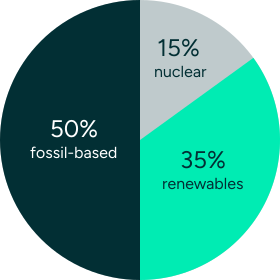

This guidance should be read as a first pass, best effort at developing guiding principles for how games studios can engage responsibly with AI technologies and its tools. We recognise that this is an emerging field, there is limited data available and we don’t hold all the answers. We aim for this guidance to open up constructive dialogue and provide a useful starting point, which can be built on and strengthened over time.

Using AI responsibly means carefully considering its full range of impacts, including (but not limited to) environmental impact.

A strong governance system should underpin the responsible use of AI and keep humans at its core.

Before using AI tools, consider the risks and opportunities.

Measure environmental impact with the tools and data available to you now and improve your methods over time.

When using AI tools, take an efficiency mindset: use it when it's genuinely helpful and by applying frugal-first principles.

Vet AI vendors and products in a way that is consistent with your broader environmental goals and policies, asking questions then probing the answers helps to unlock transparency.

Don’t tear up your carbon reduction goals: assess the impacts of using AI, review your current plans and account for uncertainty to move forward.

Lean in to a constructive dialogue with model developers and providers to proactively probe the emissions transparency gap.

Stay informed, engaged and agile and teach others what you have learned so your path can be followed by others.
1. Make a start
For those who are at the beginning of their exploration on this topic, these principles provide a useful starting point. You can start by reviewing the principles, referring to the recommendations for studios just getting started and beginning to get a plan in place.
2. Build your knowledge
For those seeking to build their knowledge, this guidance will help you learn and understand AI’s environmental impacts, what will make the difference and how to minimise impact in use.
3. Engage your teams
Conversations around the use of AI can be challenging. These principles will help to start conversations with your teams around shaping the vision for using AI within your studio, what to include in a holistic governance system and thinking through the risks and opportunities. There are also useful tips and tricks to help educate colleagues around minimising impact in use.
4. Begin to monitor and track
Many are seeking guidance on how to measure the environmental impact of the use of AI. While we don’t hold all the answers, this guidance will help you to know where to start, how to begin to monitor and track usage and what to look for from your AI service providers.
5. Raise your voice
We’re in this together. We all lack the information and data to accurately track and measure. Together we can make a difference.This guidance provides a checklist of environmental data to request from AI service providers, as well as recommendations for how we can move forward on this agenda as an industry.
Recommendations for studios and the games industry to move forward on this agenda
Artificial intelligence is a broad category of technologies which perform tasks similar to those typically associated with human intelligence. These technologies have existed for decades (such as machine learning and optimisation algorithms) and in recent years, developments in generative artificial intelligence (a subset of the field of AI) have led to new applications such as large language models, AI chatbots and image generation.
Traditional uses of AI include: AI algorithms to control non-player characters (NPCs), algorithmic procedurally generated content and levels, machine-learning upsampling techniques, online matchmaking systems.
Examples of how generative is being explored in games includes: generative coding using large language models, image generation for ideation and prototyping, in-game help offered to players through generative AI agents.
Currently it is difficult to accurately measure the environmental impact of AI for game studios due to a lack of consistent measurement methods and environmental data. However, there are ways to begin to track and monitor usage and develop estimates for environmental impact (see Principles in Practice).
The use of AI tools has environmental impacts related to energy, carbon emissions, water and e-waste. AI’s environmental footprint is largely associated with data centers, and is relatively small today at a global scale, yet the situation is evolving rapidly and the future is uncertain. Per use impacts vary significantly across uses (e.g., agentic and reasoning queries can use 25x to 1000x the energy of a short text query).
There is uncertainty about the trajectory that AI technologies will take, and the scale of their resulting environmental impact. We should collectively support initiatives for greater transparency and better monitoring, so that whatever the future holds, we steer it towards positive environmental outcomes.
For many studios, emissions associated with the usage of AI tools will fall under scope 3 emissions, category 1. For studios with significant usage of cloud-based AI tools, scope 3 emissions related to cloud services could potentially increase meaningfully. However, for many studios, cloud services typically represent a small portion of total emissions.
We think for many studios that existing carbon reduction targets can still be achievable, but studios should perform a review of their current cloud and compute-related emissions and assess how these may change based on scale of AI adoption. Transition plans will need to account for emissions as they are today while also planning for future uncertainties.
In our discussions with studios and through research, we’ve seen that many studios are in the early or transitional phase of implementing AI use and establishing policies related to its use.
These uses range from:
In studios, AI is being used for tasks including:
When an internal policy is in place, studios often have a dedicated team or position with pre-defined tasks that need to be supported by AI. Other members are testing out tools or in a research phase, assessing how in-game features are affected and comparing them with non-AI supported content.
AI policies are incredibly different among studios, ranging from no policy at all, AI use not allowed, optional, mandated, or only selective use (InvestGame, 2025).
The environment is a concern, but not typically the main concern with the use of AI
Sustainability and the environmental impact is not a key driver for studios to develop an AI policy. The main drivers are regulatory and ethical concerns as well as cost-related. However, environmental impacts are considered in studios through:
Maturity and standardisation of environmental impact tracking methods
There are currently no standardised methods and tools for games studios to measure the environmental impact specifically associated with AI use. Current practices among P4P members vary from tracking AI licenses/users in the game production pipeline as proxy, numbers of users and licenses internally, to using an internal carbon footprint measurement tool or benchmarking from broader carbon accounting.
Transparency of environmental impacts of AI models and services
Other concerns also include the transparency regarding AI models and infrastructure that rarely disclose meaningful information about the environmental impacts. This lack of visibility creates challenges for studios to make informed procurement, deployment and operational decisions.
Engagement with service providers regarding AI disclosure
While several P4P members seek environmental impact disclosure from service providers, companies have limited visibility into the sustainability aspect or environmental impact of their systems. The complexity of the games industry supply chain further complicates efforts to map AI use and its environmental impacts across the sector, particularly where multiple third-party providers are involved.
Future uncertainties related to the use of AI technologies in development processes, games and supporting infrastructure
With many studios still in a period of exploration and experimentation, the future trajectory for AI technologies in the games industry remains uncertain. AI models and capabilities, as well as how they are being applied, are developing rapidly with new approaches such as neural rendering and generative game worlds being explored. It's important that as an industry, we assess and plan for different future scenarios and their implications on the environment.
Sources used for reference to develop energy per query and per 1k token approximations above:
How Hungry is AI? Benchmarking Energy, Water, and Carbon Footprint of LLM Inference, Jegham et. al, 2025, https://arxiv.org/pdf/2505.09598
Measuring the environmental impact of delivering AI at Google Scale, Elsworth et. al, Google, 2025, https://arxiv.org/pdf/2508.15734
Energy Use of AI Inference: Efficiency Pathways and Test-Time Compute, Oviedo et. al, Microsoft, 2025, https://arxiv.org/pdf/2509.20241
How much energy does ChatGPT use?, Josh You, Epoch.ai, 2025, https://epoch.ai/gradient-updates/how-much-energy-does-chatgpt-use
Rule of thumb token assumptions:
Coding, text, audio assume 0.35 Wh/1k tokens. Reasoning and agentic assume 0.70 Wh/1k tokens. Video assumes range of energy consumption from Ecologits calculator at 720p.